Floor Plan Render vs Twinmotion — Static AI vs Real-Time 3D Walkthrough
Roomagen Floor Plan Render uses AI static rendering at 90 seconds and $0.29 per render vs Twinmotion real-time 3D walkthrough requiring 3D model plus 2–4 hours rendering, $249/yr license — real-time matters for client walkthroughs, AI static wins for most static visualization use cases.
Twinmotion ($249/yr) is a popular real-time architectural rendering tool — affordable per seat, integrates with Revit and SketchUp via Datasmith, produces real-time 3D walkthroughs alongside static renders. Twinmotion excels at client walkthrough meetings where prospective buyers or clients navigate the rendered space live. For static rendering use cases (MLS listings, brochures, social media, pitch decks, schematic presentations), the Twinmotion 3D model build + render pipeline (2–4 hours per output) is overhead beyond what static visualization needs. Roomagen renders static visualization in 90 seconds for $0.23–$0.40 — sufficient for typical real estate marketing, schematic architecture work, and routine project milestones. Real-time walkthrough is necessary for specific use cases (premium client meetings, sales gallery interactive displays); static is sufficient for everything else.
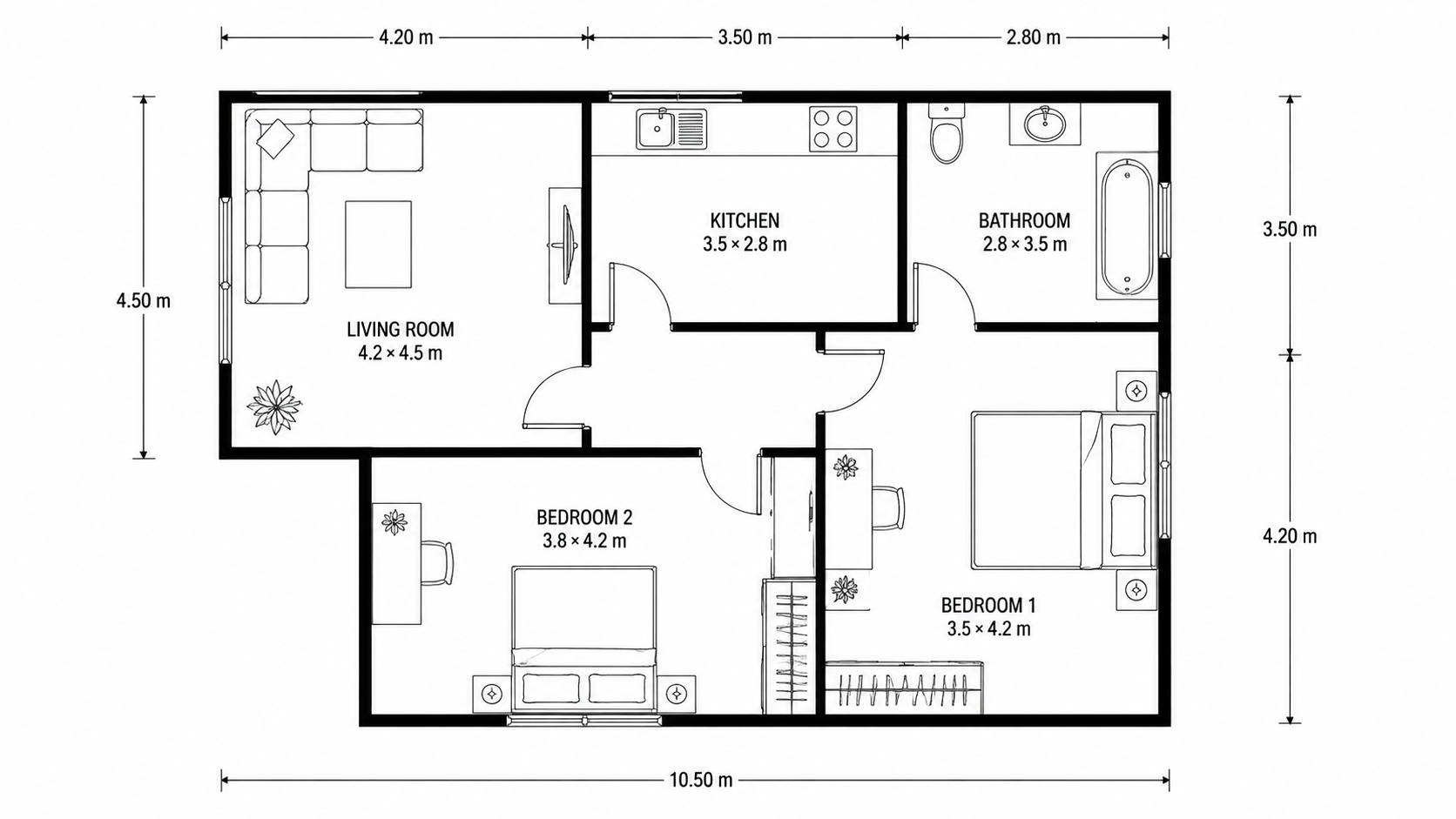
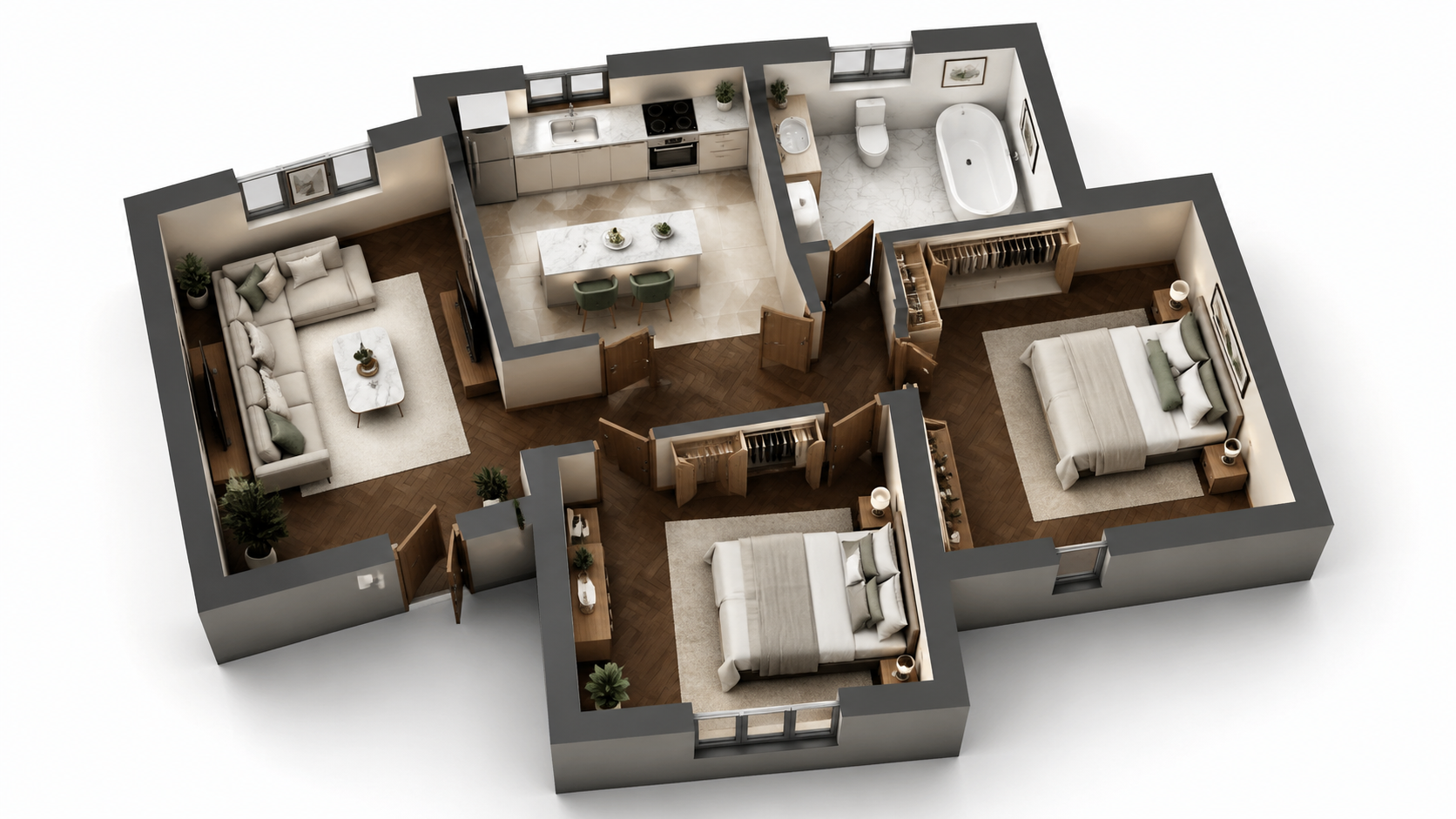
Demo example: the “Before” image was created with AI for this site; it is not a customer photo.
Features
Roomagen Floor Plan Render vs Twinmotion. AI static rendering in 90 seconds for $0.29 vs Twinmotion real-time 3D walkthrough requiring model + 2–4 hours, $249/yr license. Real-time matters for some cases; AI static wins for most.
How Does Roomagen AI Compare to Twinmotion?
AI static rendering in 90 seconds vs 4–6 hours total Twinmotion workflow (model build + render) — sufficient for 80% of rendering use cases
When Is Real-Time Walkthrough Necessary vs Static Render?
No Twinmotion install, no Datasmith plugin, no real-time engine learning curve — for static visualization use cases at $0.23–$0.40 per render
Why Choose AI Static Over Twinmotion Real-Time for Most Use Cases?
Hybrid workflow option — AI handles static rendering, Twinmotion handles real-time client walkthroughs and architectural animation
How It Works
Get professional results in three simple steps
Drop your photos here
or browse files
Upload Your Photos
Drag and drop your photos or browse to upload them. Roomagen accepts JPEG, PNG and WebP files up to 50 MB each.
AI Processing
Our advanced AI analyzes your images and applies professional enhancements automatically. Choose from virtual staging, enhancement, object removal, or day-to-dusk conversion.
Download Results
Preview your transformed images and download high-resolution results ready for listings, marketing materials, social media, and more. No watermarks on premium plans.
Why Choose Roomagen
AI Static Render: 90 Seconds, $0.29, Listing-Ready Output
AI static rendering in 90 seconds vs 4–6 hours total Twinmotion workflow (model build + render) — sufficient for 80% of rendering use cases
Twinmotion Real-Time: 2–4 Hours After Model, $249/yr, Walkthrough Capability
No Twinmotion install, no Datasmith plugin, no real-time engine learning curve — for static visualization use cases at $0.23–$0.40 per render
Real-Time Necessary for Specific Use Cases — AI Static Wins for Most
Hybrid workflow option — AI handles static rendering, Twinmotion handles real-time client walkthroughs and architectural animation
Who Is It For?
Twinmotion Users Evaluating AI
Currently use Twinmotion for both static rendering and real-time walkthroughs. AI replaces static rendering at fraction of time and cost; reserve Twinmotion for real-time walkthrough use cases only.
Architects on Tight Budgets
Twinmotion ($249/yr) is the affordable real-time rendering option, but per-render time still 2–4 hours. AI static rendering at $0.29 covers most static visualization use cases at fraction of Twinmotion per-render time.
Sales Gallery Coordinators
Sales galleries with interactive displays benefit from Twinmotion real-time walkthroughs. Static brochures and pitch deck materials benefit from AI static rendering economics. Use both: Twinmotion for interactive, AI for static.
Twinmotion costs $249/yr per seat plus 2–4 hours per render after the 3D model is built (model build adds 2–6 hours). Twinmotion provides real-time walkthrough capability that AI static rendering does not. Roomagen renders static visualization in 90 seconds for $0.23–$0.40 — sufficient for typical static use cases (MLS, brochures, social, pitch decks).
| Roomagen AI Static | Twinmotion Real-Time | Hybrid Workflow | |
|---|---|---|---|
| License cost | $12–$79/month | $249/yr per seat | $29/mo + $249/yr |
| Time per static render | 90 seconds | 4–6 hours (model + render) | 90 sec static, 4–6 hr real-time |
| Real-time walkthrough | No — static only | Yes — primary feature | Yes via Twinmotion |
| Skill required | None | Twinmotion + Datasmith | Twinmotion for real-time only |
| Best use case | MLS, brochures, social, schematic | Client walkthroughs, gallery displays | Both — reserve Twinmotion for real-time |
Frequently Asked Questions
Everything you need to know about Roomagen
Real-time walkthrough matters for premium client meetings (clients navigate the space live during the meeting) and sales gallery interactive displays. Static rendering is sufficient for MLS listings, brochures, social media, pitch decks, schematic reviews, and printed marketing materials. The 80/20 split: 80% of rendering use cases need static, 20% need real-time.
AI output is JPG/PNG, not 3D model — cannot be loaded into Twinmotion as a 3D scene. For Twinmotion real-time walkthroughs, build the 3D model in Revit/SketchUp and import via Datasmith. AI rendering is the alternative for static visualization, not a Twinmotion-compatible asset.
For typical static visualization use cases (MLS, brochures, schematic reviews), comparable for stakeholder communication. AI is dramatically faster (90 seconds vs 4+ hours total). Twinmotion static renders can include more custom material assignment and lighting variation than AI rendering allows.
For architects whose work is primarily static visualization (schematic phase, brochures, pitch decks), yes. For architects who present to clients with real-time walkthroughs, Twinmotion remains essential. Drop Twinmotion for static-only workflows; keep for real-time client experience.
Twinmotion: $249/yr per seat + 2–4 hr × 50 plans = $249 + 100–200 hours labor (~$8K–$40K at firm rates). Roomagen Pro: $29/month = $348/yr for 100 plans. Twinmotion wins on absolute software cost but loses dramatically on labor + per-render time. AI total cost typically 25–100x cheaper at meaningful volume.
Sales gallery interactive displays still benefit from Twinmotion real-time walkthroughs — buyers navigate the space at the gallery. AI static rendering supplements with brochure and online listing visualization. Use both: Twinmotion for gallery interactive, AI for static print and online.
Yes — many architects use Roomagen for static rendering (90 seconds) and Twinmotion for client real-time walkthroughs (premium meeting experience). Hybrid workflow saves 100–300 hours per project on static rendering while preserving real-time walkthrough capability for client meetings.
For architects using Datasmith and Unreal Engine for premium real-time experiences, that workflow remains essential — AI does not replace high-end real-time architectural visualization. AI replaces static rendering specifically. Different use cases for different tools.
Twinmotion produces phased rendering (construction sequencing) and architectural animation that AI does not replicate. For phasing and animation use cases, Twinmotion remains essential. AI is for static plan visualization.
For static rendering as the primary use case, yes — AI replaces Twinmotion at fraction of time per render. For real-time walkthrough and architectural animation, Twinmotion remains essential. Use both: AI for static, Twinmotion for real-time.
Part of
Floor Plan VisualizeMore From This Family
- Online Floor Plan Renderer
- How to Render a Floor Plan
- 3D Floor Plan Rendering Tool
- Visualize House Floor Plans
- Visualize Apartment Floor Plans
- Visualize Office Floor Plans
- Visualize Restaurant Floor Plans
- Visualize Hotel Floor Plans
- Visualize Retail Floor Plans
- Visualize Warehouse Floor Plans
- Visualize Clinic Floor Plans
- Visualize School Floor Plans
Explore Related Tools
Discover more AI-powered tools to enhance your visual content
Floor Plan Visualize — AI 3D Renders From 2D Plans in Under a Minute
Visualize 2D floor plans as 3D renders with AI. Photoreal, architectural sketch, stylized, and monochrome styles, furnished or unfurnished, output in under 90 seconds for $0.23–$0.40 per render — no 3ds Max, Lumion, or Twinmotion required.
Learn moreFloor Plan Render vs Lumion — AI Direct From 2D vs Lumion From 3D Model
Roomagen Floor Plan Render vs Lumion — head-to-head comparison. AI in 90 seconds direct from 2D plan vs Lumion requires 3D model first plus 2–6 hour render time, $1,499/yr license. AI wins for routine, Lumion wins for premium real-time presentations.
Learn moreFloor Plan Render vs 3ds Max — AI in Under a Minute vs Hours of Modeling
Roomagen Floor Plan Render vs Autodesk 3ds Max — head-to-head comparison. AI in 90 seconds for $0.29 vs 5–10 hours of 3D modeling plus $2,150/yr 3ds Max + V-Ray license. Quality comparable for routine, 3ds Max wins for premium.
Learn moreAI Floor Plan Render vs Manual — Hours of 3D Work vs Under a Minute
AI floor plan rendering vs manual 3D render service outsourcing. AI in 90 seconds for $0.29 vs render firms taking 3–7 days at $200–$800 per render. AI wins on speed, cost, and iteration; manual wins on brand customization.
Learn moreSketchUp Floor Plan Render — AI Rendering Without V-Ray Setup
SketchUp floor plan rendering with AI. Export SketchUp plan as a PNG or JPEG image, upload, get rendered visualization in 90 seconds — replaces V-Ray for SketchUp for routine plan rendering at $0.23–$0.40.
Learn more