Permit Floor Plan Render — Visualization for Permit Submission and Public Hearings
Roomagen Permit Floor Plan Render produces visualization for permit submissions, design review boards, and public hearings — photoreal renders communicate project intent to non-technical reviewers, with permit approval cycles typically compressing 30%+ versus CAD-only submissions.
Permit submissions traditionally rely on CAD drawings only — design review boards, planning departments, and public hearing audiences struggle to interpret 2D plans. Approval cycles drag because non-technical reviewers ask clarifying questions or request additional materials. Adding rendered visualizations to permit submissions communicates project intent visually — non-technical reviewers understand quickly, approval votes happen with confidence, public comment periods produce constructive feedback rather than confused opposition. Architectural visualization firms charge $400–$1,200 per render with 1–2 week turnaround. Roomagen renders permit-package visualization in 90 seconds for $0.23–$0.40 — every permit submission gets rendered support without budget approval delays. Permit approval cycles compress 30%+ when submissions include rendered visualizations alongside CAD drawings.
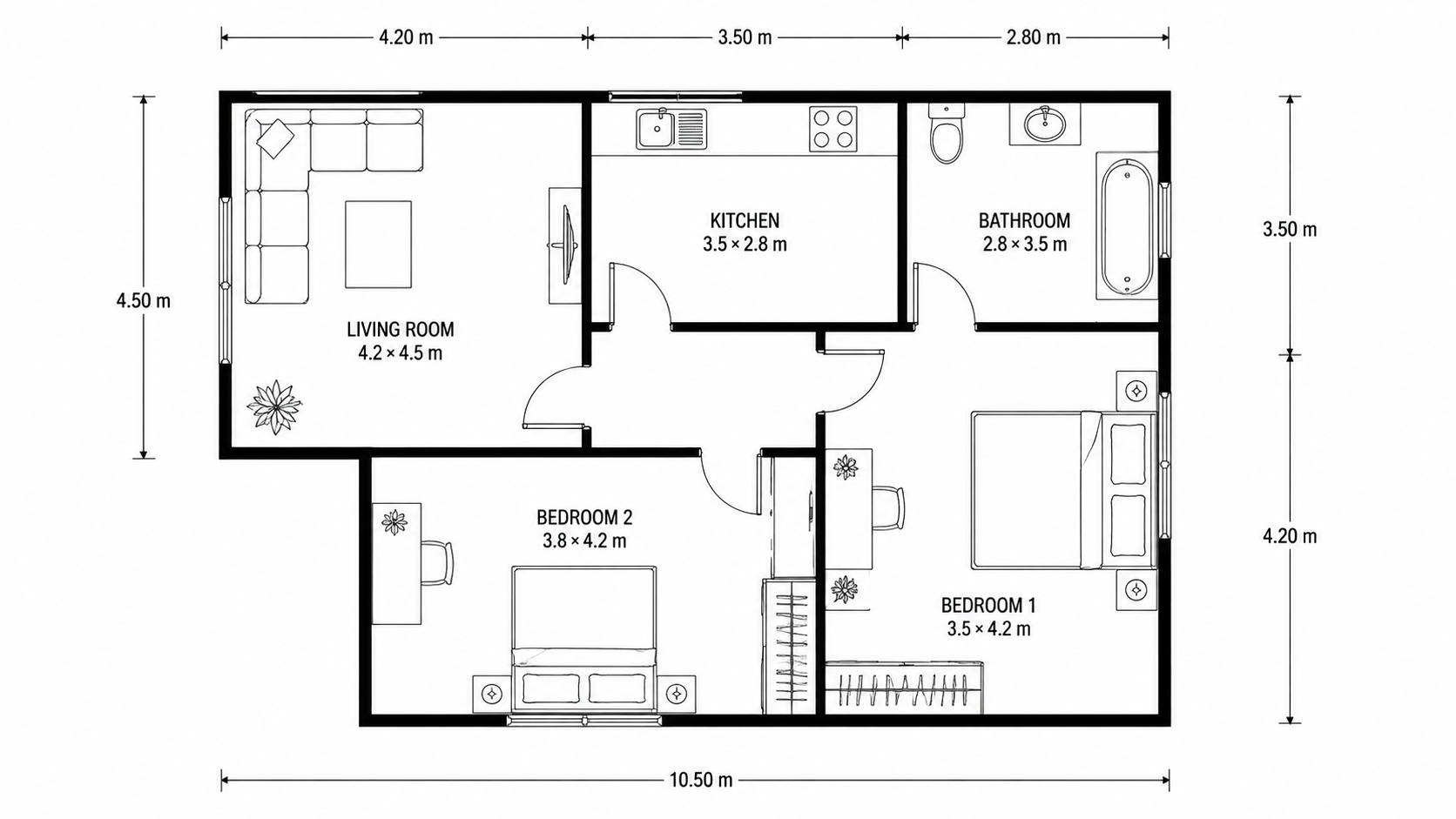
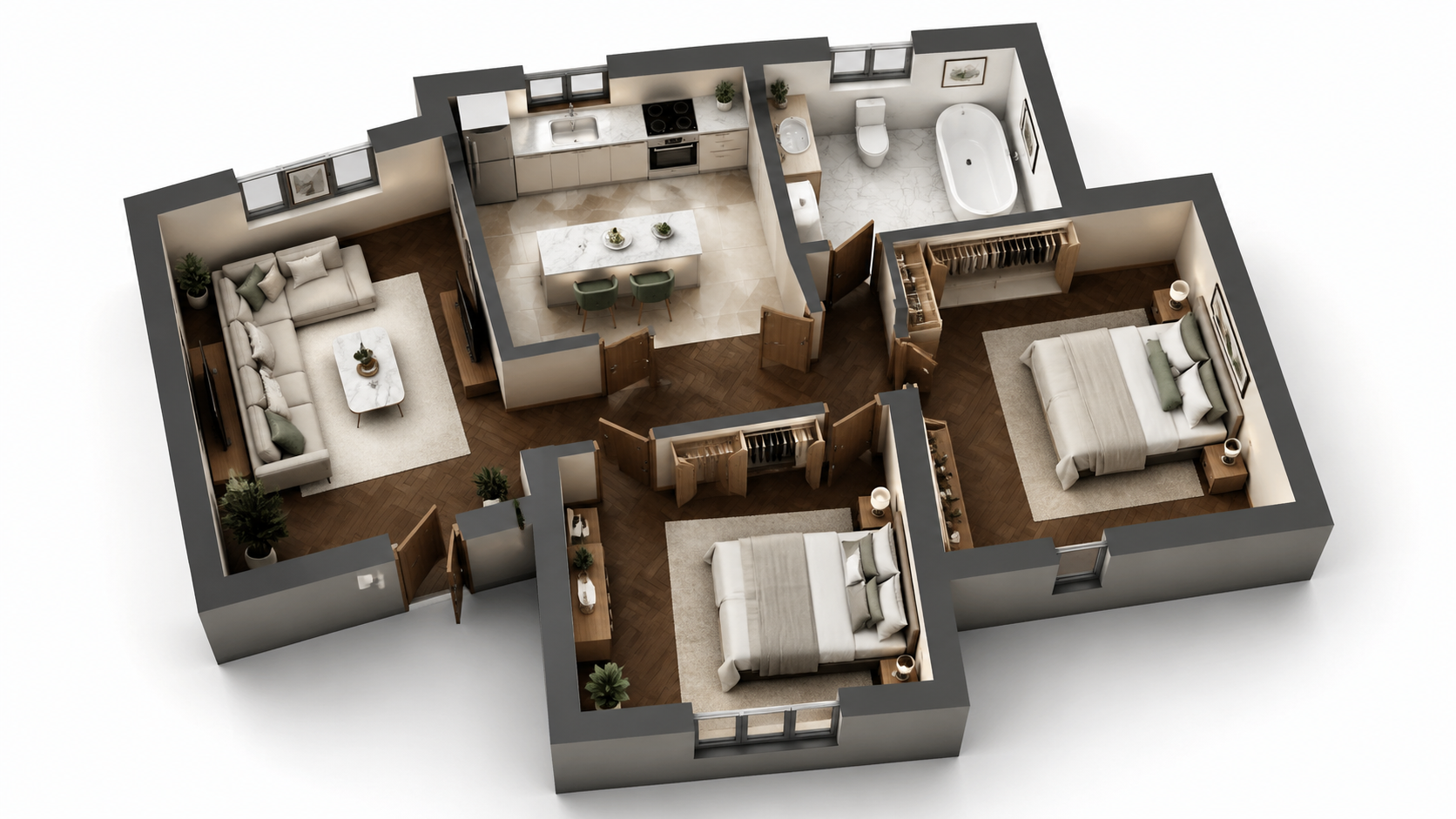
Demo example: the “Before” image was created with AI for this site; it is not a customer photo.
Features
Permit floor plan rendering — AI visualization for permit submissions, design review boards, and public hearings. Photoreal renders communicate project intent to non-technical reviewers — approval cycles compress 30%+ versus CAD-only submissions.
How Does AI Support Permit Submission Floor Plan Visualization?
Permit submission rendering — design review boards, planning commissions, and public hearings approve projects 30%+ faster with rendered visualization alongside CAD
What Render Style Suits Permit Authorities and Public Hearings?
Variance hearing and historic district commission optimized — non-technical reviewers visualize project intent rather than interpreting CAD drawings
Why Add Renders to Permit Submissions Beyond CAD Drawings?
Existing condition vs proposed rendering for $0.58 — side-by-side visualization clarifies the proposed change for permit reviewers
How It Works
Get professional results in three simple steps
Drop your photos here
or browse files
Upload Your Photos
Drag and drop your photos or browse to upload them. Roomagen accepts JPEG, PNG and WebP files up to 50 MB each.
AI Processing
Our advanced AI analyzes your images and applies professional enhancements automatically. Choose from virtual staging, enhancement, object removal, or day-to-dusk conversion.
Download Results
Preview your transformed images and download high-resolution results ready for listings, marketing materials, social media, and more. No watermarks on premium plans.
Why Choose Roomagen
Photoreal Renders Communicate Project Intent to Non-Technical Reviewers
Permit submission rendering — design review boards, planning commissions, and public hearings approve projects 30%+ faster with rendered visualization alongside CAD
Variance Hearings, Design Review Boards, Public Comment Periods
Variance hearing and historic district commission optimized — non-technical reviewers visualize project intent rather than interpreting CAD drawings
Permit Approval Cycles Compress 30%+ With Rendered Submissions
Existing condition vs proposed rendering for $0.58 — side-by-side visualization clarifies the proposed change for permit reviewers
Who Is It For?
Project Architects (Permit Submission Lead)
Add rendered visualizations to every permit submission — design review boards approve projects faster when they can visualize intent rather than interpret CAD drawings. Approval cycles compress 30%+ on average.
Real Estate Developers (Variance Hearings)
Variance and zoning hearings benefit from rendered visualizations — public commentators react constructively to rendered projects rather than opposing CAD-only submissions out of confusion. Hearing outcomes improve.
Land Use Attorneys
Use rendered visualizations in client representation for variance hearings, design review board appearances, and public comment periods. Client cases stronger with rendered evidence supporting CAD documentation.
Architectural visualization firms charge $400–$1,200 per permit-package render with 1–2 week turnaround. In-house Lumion workflow takes 5–10 hours per render plus $1,499/yr license. Roomagen renders permit visualization in 90 seconds for $0.23–$0.40 — permit approval cycles typically compress 30%+ with rendered submissions versus CAD-only.
| Roomagen AI | Architectural Visualization Firm | CAD-Only Submission | |
|---|---|---|---|
| Cost per render | $0.23–$0.40 | $400–$1,200 | $0 marginal |
| Turnaround | Under 90 seconds | 1–2 weeks | No render needed |
| Permit approval cycle compression | 30%+ faster | 30%+ faster (slow setup) | Baseline (slow) |
| Public hearing engagement | Constructive feedback | Constructive feedback | Confused opposition |
| Permit submission economics | Default for every submission | Premium projects only | Free but slow |
Frequently Asked Questions
Everything you need to know about Roomagen
Permit approval cycles typically compress 30%+ when submissions include rendered visualizations alongside CAD drawings. Non-technical reviewers (planning department staff, design review board members, public commentators) understand project intent faster from rendered visualization than from CAD interpretation alone.
Most planning departments accept rendered visualizations as supplementary materials alongside required CAD drawings. The CAD set remains the technical document of record; renders supplement for stakeholder comprehension. Confirm with your specific jurisdiction's submission requirements.
Yes — and especially well. Design review boards (DRBs) include lay community members alongside design professionals. Lay members particularly benefit from rendered visualization. DRB approval votes happen with greater confidence when boards can visualize project intent.
Public comment periods typically produce more constructive feedback when renders accompany CAD submissions. Public commentators react to clear visualization rather than opposing CAD-only submissions out of confusion. Many architects report public comment quality dramatically improves with rendered submissions.
Yes. Variance hearings benefit from rendered evidence showing the proposed condition versus baseline. Hearing officers and planning commissions approve variances faster when they can visualize the request versus interpreting variance descriptions and CAD drawings.
Yes. Historic district commissions evaluating proposed renovations or additions benefit from rendered visualizations showing the proposed condition in context. Historic commission approval cycles compress significantly with rendered context-aware submissions.
Photoreal Marketing for permit submissions where reviewers benefit from realistic visualization. Architectural Sketch for variance hearings where layout-not-finishes is the question. Editorial Monochrome for historic district commissions where editorial-aesthetic context matters.
Yes. Render existing condition and proposed condition separately. Place side-by-side in permit submission documents — reviewers understand the proposed change visually rather than interpreting "what is changing" from CAD drawings.
Land use attorneys representing clients in variance hearings, zoning appeals, and design review board cases use rendered visualizations as supporting evidence. Client cases stronger with rendered visual support — hearing outcomes improve in attorney-handled cases with rendered submissions.
Each render is 2 credits ($0.23–$0.40). A typical permit submission with 3–6 renders (existing, proposed, key views) costs $0.69–$1.62 — versus $1,200–$7,200 from architectural visualization firms.
Part of
Floor Plan VisualizeMore From This Family
- Online Floor Plan Renderer
- How to Render a Floor Plan
- 3D Floor Plan Rendering Tool
- Visualize House Floor Plans
- Visualize Apartment Floor Plans
- Visualize Office Floor Plans
- Visualize Restaurant Floor Plans
- Visualize Hotel Floor Plans
- Visualize Retail Floor Plans
- Visualize Warehouse Floor Plans
- Visualize Clinic Floor Plans
- Visualize School Floor Plans
Explore Related Tools
Discover more AI-powered tools to enhance your visual content
Floor Plan Visualize — AI 3D Renders From 2D Plans in Under a Minute
Visualize 2D floor plans as 3D renders with AI. Photoreal, architectural sketch, stylized, and monochrome styles, furnished or unfurnished, output in under 90 seconds for $0.23–$0.40 per render — no 3ds Max, Lumion, or Twinmotion required.
Learn moreFloor Plan Colorize — AI Color for Black-and-White Plans in Under a Minute
Colorize black-and-white floor plans with AI. Four designer palettes, auto-detected rooms, output ready in under 90 seconds for real estate, architecture, and interior design — no Photoshop or design skills required.
Learn morePresentation Floor Plan Render — Client Milestone Visualizations
Presentation floor plan rendering — AI visualization for client presentation milestones in 90 seconds. Photoreal aesthetic appropriate for design development and CD set reviews where finishes are decided.
Learn moreFloor Plan Visualize for Architects — 3D Renders for Every Project Phase
Floor plan visualize built for architects. AI renders for schematic, concept, and presentation phases in 90 seconds — replaces 3–8 hours of Lumion or 3ds Max work for routine project visualization. $0.23–$0.40 per render.
Learn moreConcept Design Floor Plan Render — Pre-Schematic Visualization for Early Reviews
Concept design floor plan rendering — AI visualization for pre-schematic concept phase in 90 seconds. Sketch-style aesthetic appropriate for earliest-stage concept reviews before detailed schematic drawing begins.
Learn more